
In 2026, the landscape of contact center operations continues to evolve, with remote work firmly established as a strategic model rather than a temporary workaround. Today’s leading organizations — including forward-thinking firms like XMC BPO — are leveraging remote work to enhance customer service performance, improve agent satisfaction, and optimize operational costs.
With the global shift toward distributed workforces gaining momentum, understanding the benefits and challenges of remote contact centers is critical for business leaders, HR teams, and outsourcing partners alike.
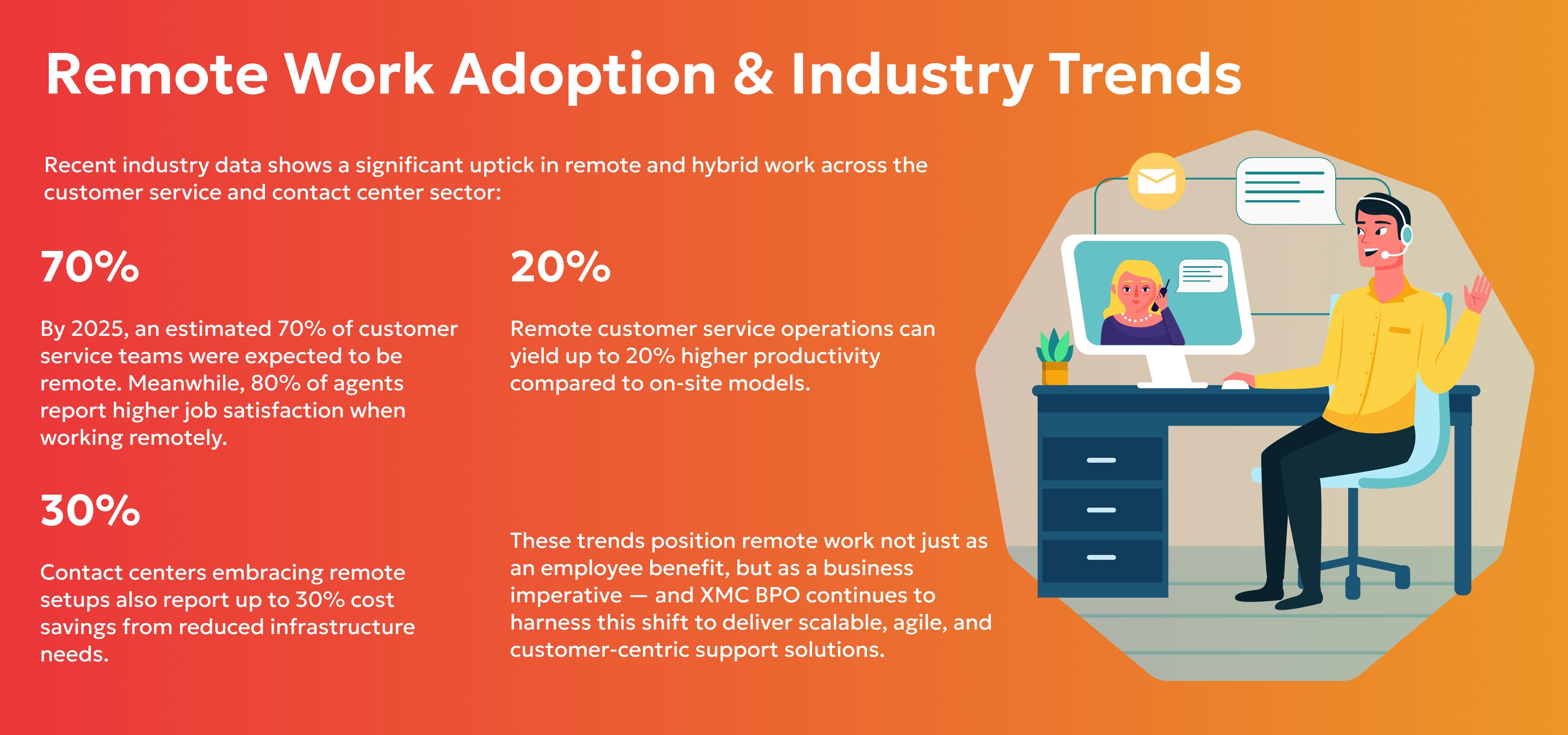
Key Benefits of Remote Work in Contact Centers

Increased Flexibility and Talent Reach
Remote work empowers contact centers to recruit from a broader geographic talent pool, overcoming the limitations of office-based hiring. This is especially valuable for specialized or multilingual support, where talent scarcity is common.

Cost Savings & Operational Efficiency
Organizations adopting remote models can save significantly on real-estate, utilities, and other overhead costs — often over $11,000 per employee annually.
Because remote work reduces dependency on physical spaces, companies like XMC BPO can reinvest savings into technology, training, and performance analytics.

Higher Productivity and Agent Satisfaction
A growing body of data indicates that remote workers can be more productive due to fewer in-office disruptions and enhanced work-life balance. Many employees prefer flexible schedules, which correlates with higher engagement and lower turnover.

Scalability & Business Continuity
Remote contact centers have built-in advantages for scaling operations. The flexibility to add agents in response to seasonal demand or unexpected spikes in customer volume helps businesses maintain consistent service levels with minimal lag time.
Analytics & Performance Metrics
The new era of remote work places data analytics at the forefront of workforce management. Contact centers are using advanced tools and real-time KPI tracking to sharpen performance and measure success:
📊 Remote activities analytics include:
- Real-time monitoring of calls, chats, and messaging performance
- Predictive forecasting to staff across peak demand windows
- Automated quality assurance to detect trends in agent interactions
- Customer satisfaction (CSAT) tracking tied to remote performance benchmarks
Analytics not only increase visibility into agent effectiveness — they also reveal patterns that can improve coaching, optimize schedules, and enhance customer experience outcomes.
Conclusion
Remote work isn’t a one-size-fits-all solution — yet its benefits are too significant to ignore. With the right technology, analytics, and culture, remote contact centers can deliver measurable performance gains, cost savings, and exceptional customer experiences. Companies that embrace these changes while addressing challenges proactively will lead the customer service landscape well into 2026 and beyond.
References
- Remote People. Remote Work Statistics in 2025: Including Productivity Trends Before and After COVID-19
- Solidroad. Contact Center Operations In 2026 Managing Remote And Hybrid Teams
- Kumospace. Remote Work Trends 2026: Statistics and Insights Unveiled
- REVE Systems. Future of Contact Centers: Key Trends Shaping CX in 2026
- CH Consulting Group. Optimizing Contact Center Operations: The Benefits of Remote Work in 2024


