
Complaints are often treated like “damage control,” but in high-performing CX organizations, they’re a free diagnostic tool—pointing directly to friction, broken processes, product gaps, and trust risks.
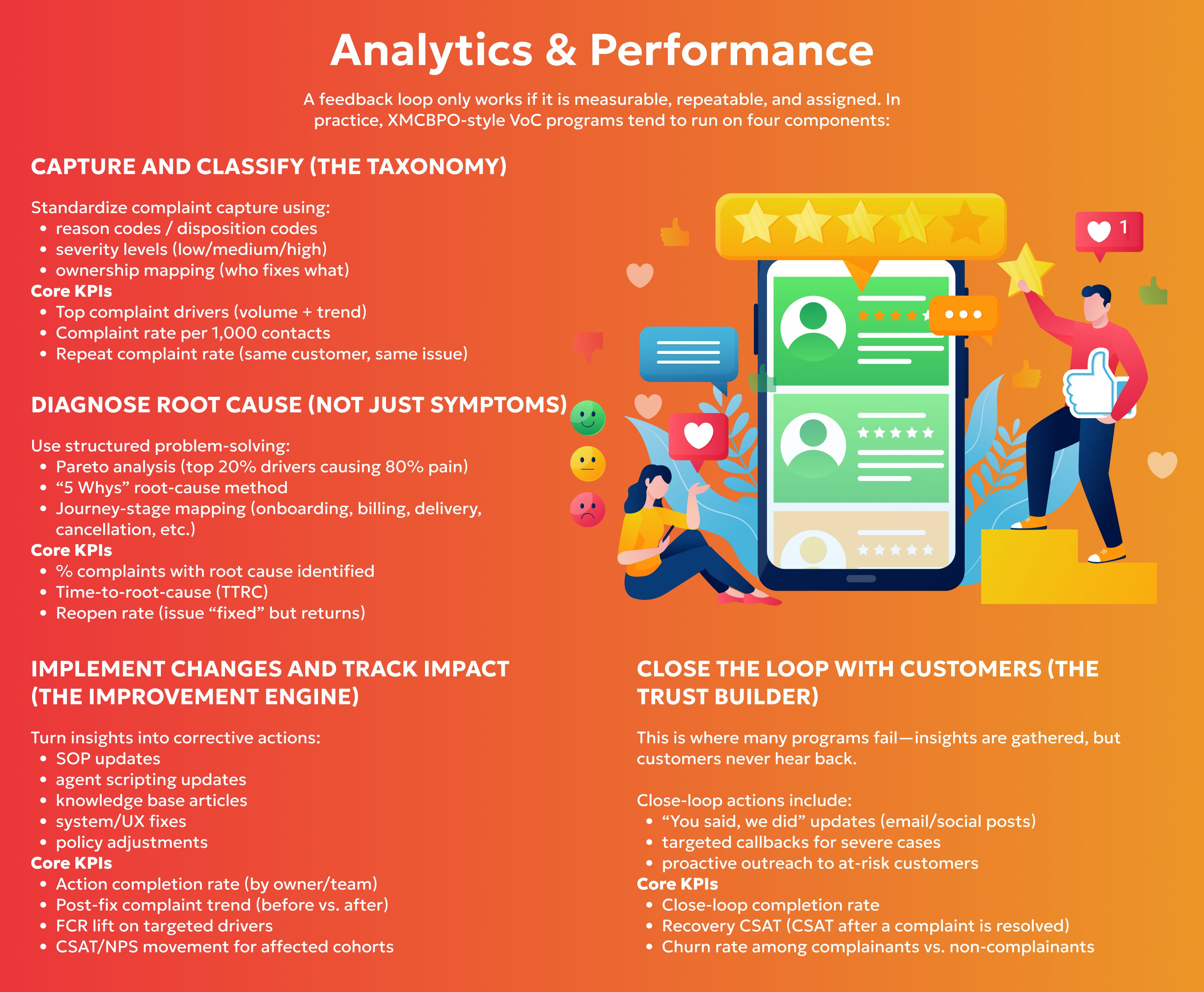
A customer feedback loop is the operating system that turns raw feedback (complaints, reviews, surveys, social comments, QA notes) into measurable improvements, then closes the loop with customers so they see action—not just apologies. For contact centers like XMCBPO, feedback loops are the bridge between daily conversations and business-wide growth.
Key Benefits

Faster issue resolution and fewer repeat contacts
- repeat contacts
- escalations
- churn risk

Stronger customer trust through “closing the loop”
- confirming the issue was received
- sharing what changed (or why it can’t change yet)
- offering an appropriate remedy when needed

Better product and process improvements (VoC to action)
- product fixes
- policy updates
- knowledge base improvements
- training and coaching priorities

Brand reputation and social sentiment protection
In public channels (reviews and social media), fast, consistent complaint handling reduces reputational damage. Feedback loops ensure what’s learned from public complaints is fed back into training and process controls—so issues don’t repeat.

Conclusion
Customer complaints are not just problems to manage—they’re opportunities to improve and differentiate. With a structured feedback loop, contact centers can convert friction into better processes, better products, stronger loyalty, and measurable operational gains.
For XMCBPO, the advantage is turning frontline conversations into a reliable improvement pipeline—where every complaint strengthens CX rather than simply consuming resources.


