
In 2026, sustainability in contact centers is moving from “good PR” to operational discipline—driven by client ESG requirements, energy-cost pressure, and growing scrutiny of digital infrastructure (especially cloud and data center energy use). Contact centers are responding with greener facilities, smarter IT, and more efficient operating models that reduce emissions without sacrificing CX.
For XMCBPO, green practices can be positioned as both a value-add (ESG-aligned outsourcing) and a performance lever (lower waste, better efficiency, more resilient operations).
Key Benefits

Lower cost-to-serve through resource efficiency
- Energy optimization (HVAC scheduling, LEDs, power management policies)
- Reduced paper + printing (digital QA, e-signatures, paperless onboarding)
- Smarter utilization (hybrid/remote strategies that right-size sites and reduce energy intensity)

Stronger client confidence and ESG alignment
Many enterprises evaluate vendors on ESG posture during procurement. Implementing an Environmental Management System (EMS)—commonly aligned with ISO 14001—helps make sustainability auditable, repeatable, and continuously improving, rather than ad hoc.

Improved resilience via digital-first operations
Cloud contact center platforms and consolidated tools can reduce reliance on on-prem infrastructure refresh cycles and enable more flexible operations during disruptions—while supporting more efficient resource use at scale. (This is increasingly discussed in broader digital sustainability guidance and infrastructure reporting.)

Better employer brand and engagement
Sustainability initiatives can strengthen culture and retention—especially for teams who value purpose-driven work. In 2026, “responsible experience” is increasingly tied to brand trust, which impacts both customers and talent.

Conclusion
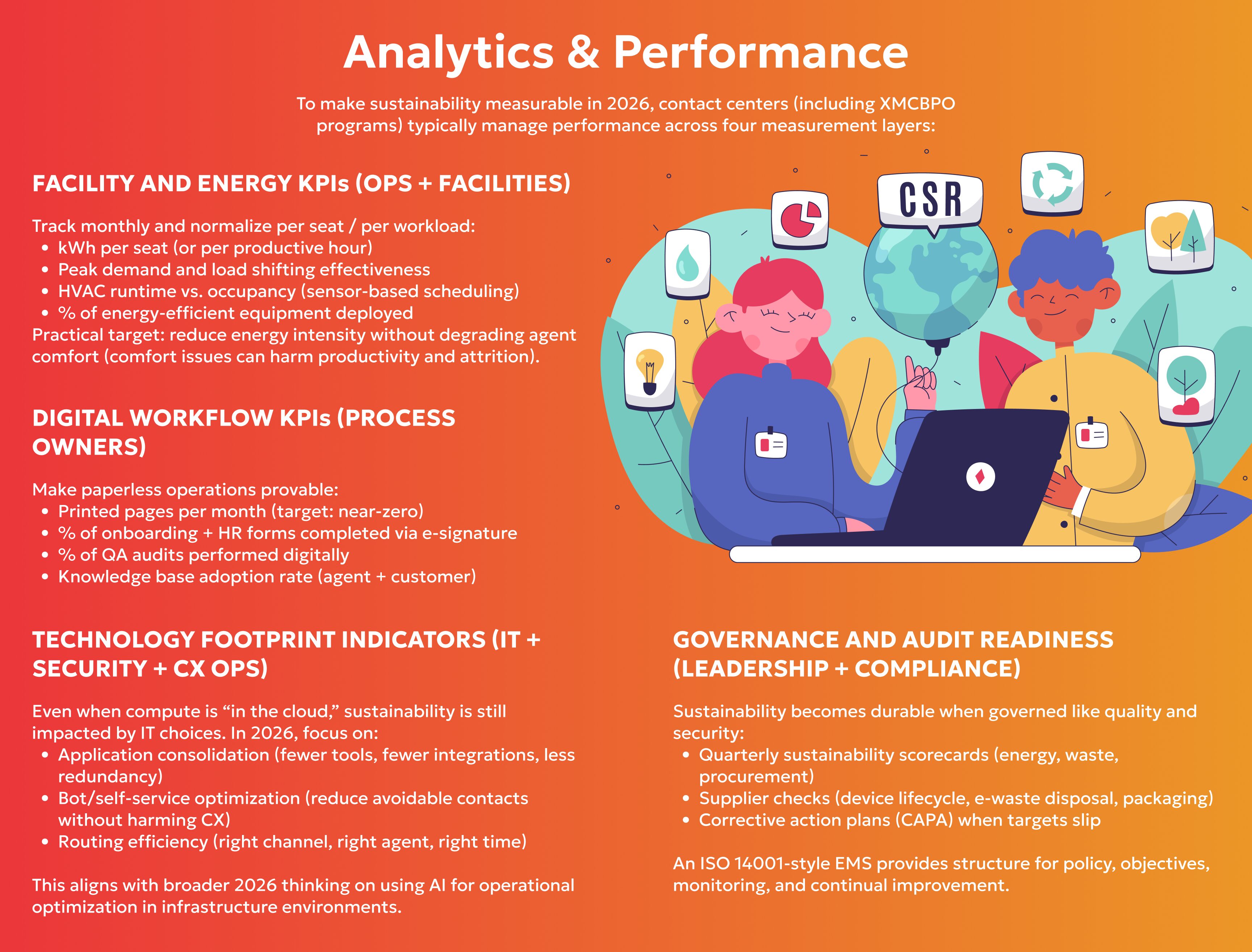
In 2026, green contact center practices are less about isolated initiatives and more about systems: efficient facilities, paperless operations, optimized tech stacks, and governance frameworks that stand up to procurement and reporting requirements. Done well, sustainability improves both ESG credibility and operational performance.
For XMCBPO, the strongest positioning is “sustainable + high-performing CX”—where measurable reductions in waste and energy intensity support client goals while maintaining (or improving) customer satisfaction.
References
- ISO. Environmental management systems — Requirements with guidance for use
- ASQ. What Is ISO 14001:2015 – Environmental Management Systems?
- European Commission. Energy performance of data centres
- Accenture. Data Centre Trends Report 2026
- BARE International. Top Trends in ESG and CX for 2026: Sustainability Meets Experience


