
Artificial intelligence has become a powerful force in modern contact centers, helping businesses automate routine tasks, improve efficiency, and deliver faster customer support. From AI-powered chatbots and virtual assistants to predictive analytics and automated workflows, technology is transforming how organizations engage with customers.
However, despite these advancements, human intelligence remains one of the most valuable assets in customer service. While AI excels at speed, data processing, and automation, it cannot fully replicate the empathy, emotional intelligence, creativity, and critical thinking that human agents bring to customer interactions.
As businesses continue to embrace digital transformation, organizations like XMCBPO are proving that the most successful customer service strategies combine the efficiency of AI with the unique strengths of human agents to create exceptional customer experiences.
Key Benefits

Empathy Creates Stronger Customer Relationships
Customers often reach out to support teams during stressful or emotional situations. Human agents can understand emotions, show empathy, and adapt their communication style to make customers feel heard and valued.
This personal connection helps build trust and long-term customer loyalty.

Better Handling of Complex Issues
While AI can efficiently resolve routine inquiries, complex problems often require human judgment, reasoning, and problem-solving skills.
Human agents can:
- Assess unique situations
- Consider multiple solutions
- Make informed decisions
- Adapt to unexpected circumstances
These capabilities remain difficult for AI systems to replicate consistently.

Emotional Intelligence Improves Customer Experience
Successful customer service involves more than simply answering questions. Human agents can recognize frustration, confusion, or urgency and adjust their approach accordingly.
This emotional intelligence often turns potentially negative experiences into positive customer outcomes.

Creativity and Critical Thinking
Every customer interaction is different. Human agents can think creatively when standard procedures are insufficient and develop personalized solutions that address specific customer needs.

Building Brand Reputation
Agents often serve as the human face of a company. Their ability to create meaningful interactions directly influences customer perception, satisfaction, and brand reputation.

Conclusion
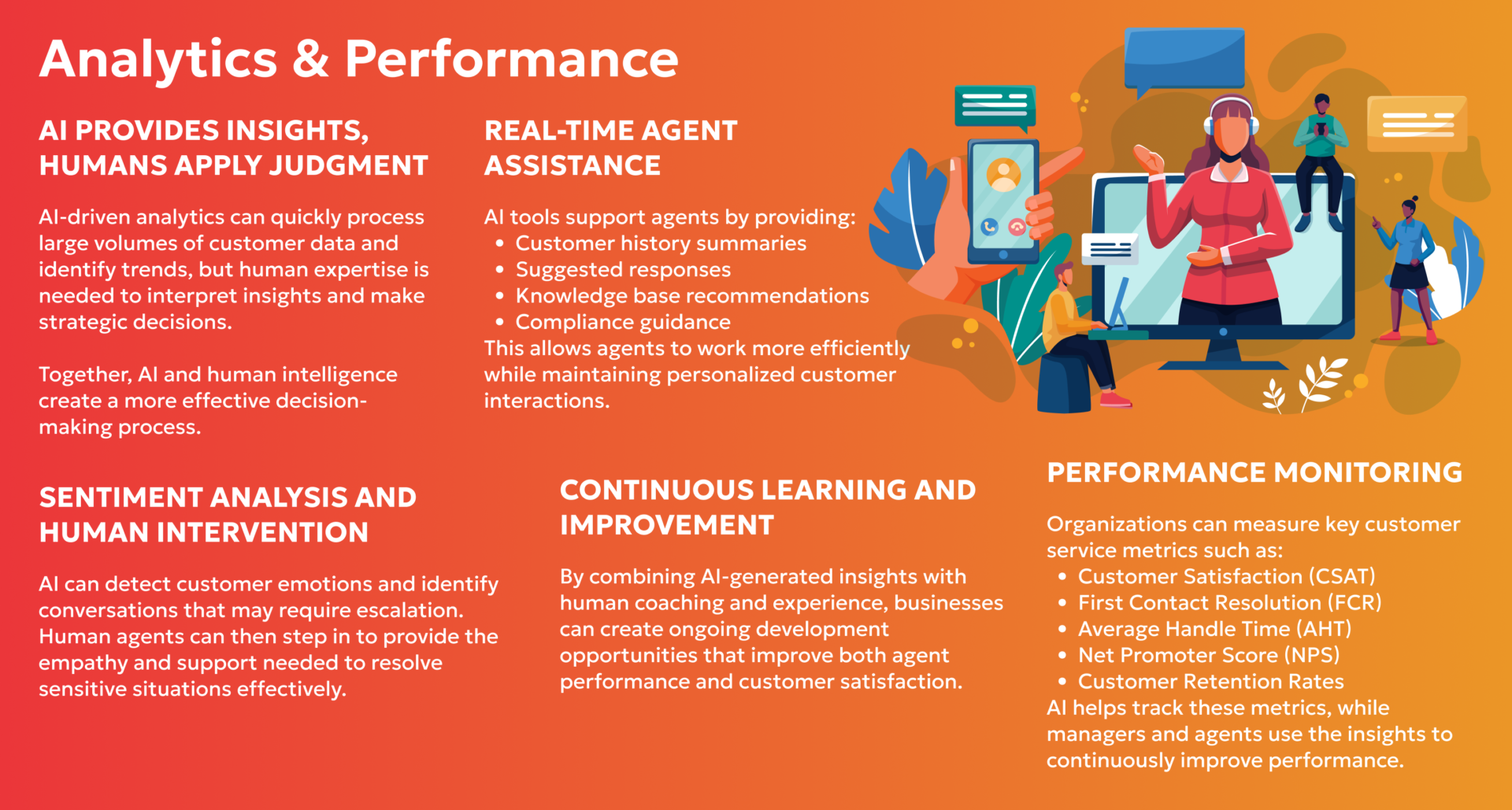
The future of customer service is not about choosing between artificial intelligence and human intelligence—it is about leveraging the strengths of both. AI brings speed, efficiency, automation, and powerful analytics, while human agents provide empathy, creativity, judgment, and relationship-building skills that customers continue to value.
As customer expectations become more sophisticated, businesses that combine advanced AI technologies with skilled customer service professionals will be best positioned to deliver exceptional experiences. Human intelligence remains essential for handling complex situations, building trust, and creating meaningful customer connections.
By integrating AI-driven innovation with experienced support teams, XMCBPO helps businesses create customer-centric contact center operations that are efficient, scalable, and prepared for the future of customer engagement.


