
In 2026, contact centers are no longer viewed as cost centers—they are revenue drivers and strategic assets. As customer experience (CX) becomes a key differentiator, organizations are under increasing pressure to prove the financial impact of their service operations.
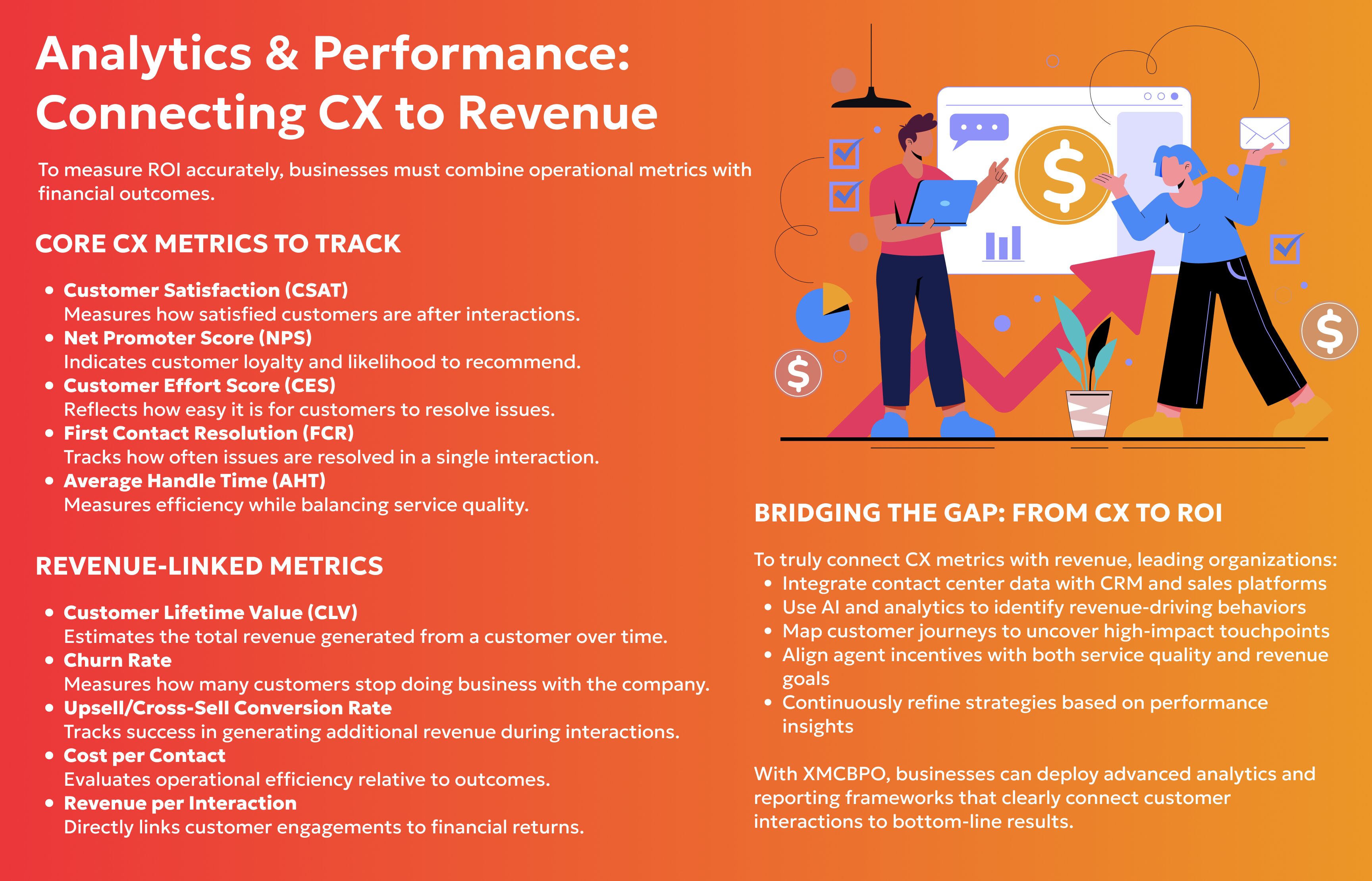
But measuring ROI in a modern contact center goes beyond tracking cost savings. It requires linking CX metrics directly to revenue outcomes—from customer retention and lifetime value to upselling and brand loyalty. With the right frameworks and support from partners like XMCBPO, businesses can clearly demonstrate how exceptional service translates into measurable growth.
Key Benefits of Measuring Contact Center ROI

Clear Business Justification
Demonstrating ROI helps secure executive buy-in for CX investments, technology upgrades, and staffing.

Improved Resource Allocation
Understanding what drives revenue allows businesses to invest in high-impact areas and eliminate inefficiencies.

Enhanced Customer Retention
By linking service quality to retention metrics, organizations can reduce churn and increase long-term value.

Revenue Growth Opportunities
Contact centers can identify upsell and cross-sell opportunities during customer interactions.

Performance Accountability
With clear ROI metrics, teams can align their efforts with business goals—an approach XMCBPO helps organizations implement effectively.

Conclusion
Measuring contact center ROI in 2026 requires a shift in mindset—from focusing solely on cost efficiency to recognizing the revenue-generating potential of customer experience.
By linking CX metrics like CSAT, NPS, and FCR to financial outcomes such as retention, lifetime value, and conversion rates, organizations can gain a comprehensive view of their impact.
With the right strategy and support from XMCBPO, contact centers can move beyond traditional metrics and become powerful engines of growth—delivering measurable value for both customers and the business.


