
In today’s experience-driven economy, contact centers are no longer reactive support hubs—they are becoming predictive intelligence engines. By leveraging advanced analytics, contact centers can anticipate customer needs, personalize interactions, and resolve issues before they escalate. As competition intensifies and customer expectations rise, predictive analytics has become a strategic advantage for modern contact centers, including forward-thinking providers like XMC BPO.
The Rise of Predictive Analytics in Contact Centers
- Organizations using customer analytics are 2.6 times more likely to report significant improvements in customer satisfaction.
- Predictive analytics can reduce customer churn by up to 25% by identifying at-risk customers early.
- Contact centers that adopt AI-driven analytics report 20–30% reductions in average handling time (AHT).
How Analytics Helps Predict Customer Needs

Behavioral Pattern Analysis
Analytics tools examine customer interaction history to identify recurring issues and patterns. For example, if customers frequently call after a specific transaction or system update, contact centers can proactively provide guidance or notifications before problems arise.

Sentiment and Speech Analytics
Advanced speech and text analytics evaluate tone, keywords, and emotional cues during calls or chats. This helps predict customer intent and urgency, allowing agents to tailor responses in real time. Companies like XMC BPO use sentiment insights to route high-risk or high-value interactions to skilled agents.

Customer Journey Mapping
By analyzing multi-channel data—voice, email, chat, and social media—contact centers gain a holistic view of the customer journey. Predictive models can forecast the next likely touchpoint and prepare agents with relevant information, improving first-contact resolution (FCR).

AI-Driven Forecasting
Machine learning models analyze large datasets to predict call volumes, peak hours, and customer concerns. This allows contact centers to optimize staffing, reduce wait times, and ensure consistent service levels.
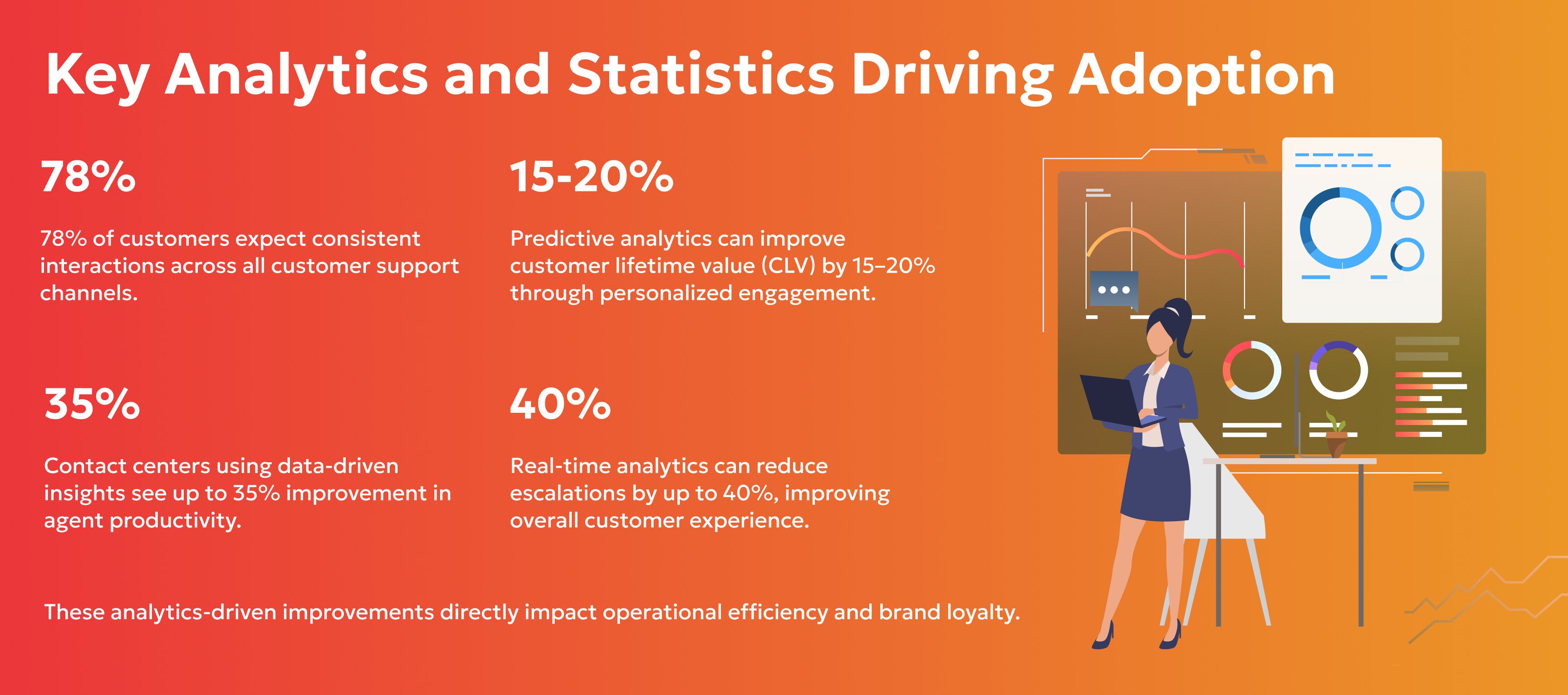
Key Benefits of Predictive Analytics for Contact Centers
Improved Customer Experience
Anticipating customer needs leads to faster resolutions, personalized conversations, and fewer repeat contacts.
Proactive Issue Resolution
Instead of waiting for complaints, contact centers can address potential issues before customers even reach out.
Better Agent Performance
Analytics equips agents with contextual insights, recommended responses, and next-best actions—reducing stress and improving accuracy.
Cost Efficiency
Lower call volumes, reduced AHT, and improved workforce planning translate into significant cost savings.
Data-Driven Strategy
Insights from analytics help leadership make informed decisions about service design, technology investments, and customer engagement strategies.
The Role of XMC BPO in Analytics-Driven Contact Centers
As analytics becomes central to customer service success, XMC BPO supports organizations by integrating data-driven tools, AI-powered insights, and performance analytics into contact center operations. This enables businesses to move from reactive support to predictive, customer-centric engagement.
Conclusion
Predictive analytics is transforming contact centers into intelligent hubs that anticipate customer needs rather than simply responding to issues. By harnessing data, AI, and real-time insights, contact centers can deliver faster, more personalized, and more efficient service. As customer expectations continue to evolve, leveraging analytics is no longer optional—it’s essential. With partners like XMC BPO, businesses can unlock the full potential of analytics to build stronger relationships, reduce costs, and stay ahead in an increasingly competitive market.


