
Contact centers are at the heart of business-to-customer engagement, and as customer expectations continue to evolve, so do the technologies that support them. Today, businesses are faced with a critical choice: Cloud-based contact center solutions or On-Premise contact center infrastructure. This decision not only affects operational efficiency but also impacts customer satisfaction, scalability, cost structure, and long-term innovation.
In this post, we explore the future of contact centers, comparing cloud and on-premise solutions, backed by analytics, statistics, and key benefits, while incorporating insights on XMC BPO — a modern leader in outsourced contact center operations.
Understanding the Two Models
1. Cloud-Based Contact Centers
Cloud solutions operate on remote servers managed by third-party providers. These platforms deliver services over the internet, eliminating the need for extensive local hardware.
Popular cloud providers include: Amazon Connect, Google Contact Center AI, Cisco Webex Contact Center, and Genesys Cloud.
2. On-Premise Contact Centers
On-premise systems are installed and maintained on local servers within a company’s physical infrastructure. This model gives direct control and customization but requires significant internal resources.
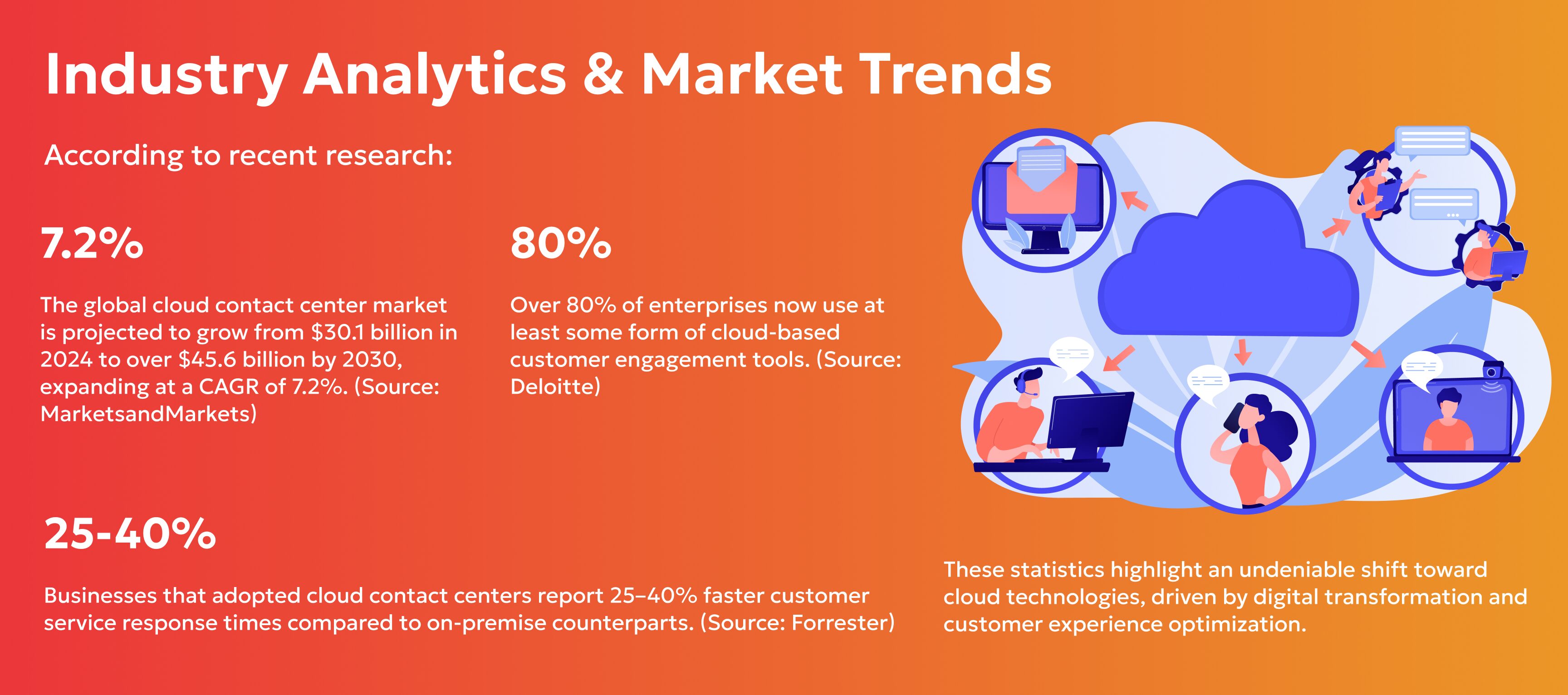
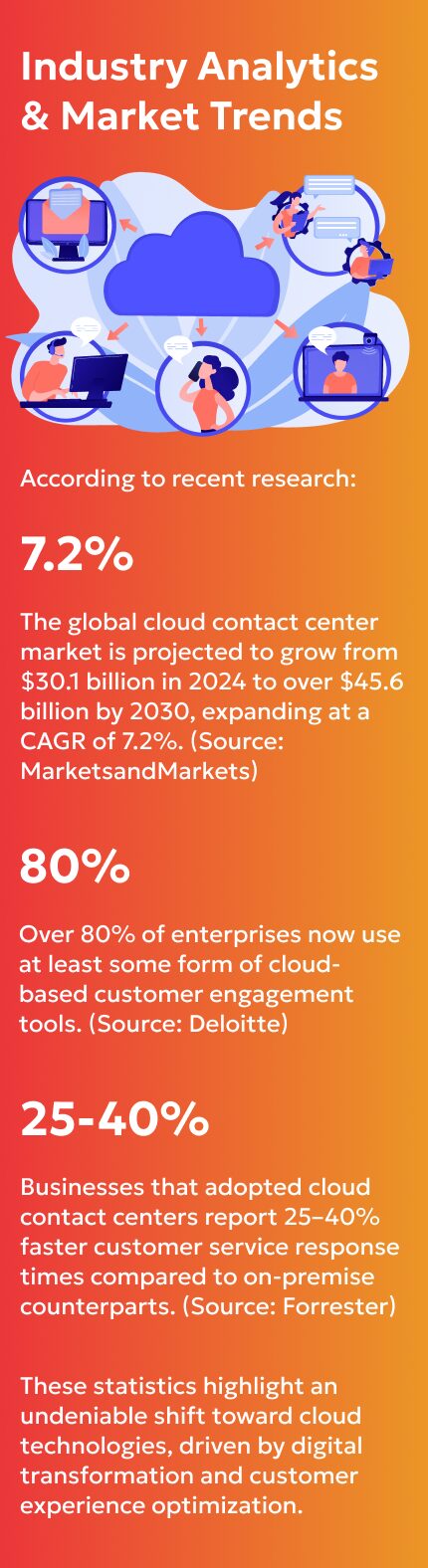
Key Benefits: Cloud vs On-Premise

Scalability
- Cloud: Instantly scalable — ideal for seasonal spikes and rapid growth.
- On-Premise: Limited by physical hardware and internal infrastructure upgrades.

Cost Efficiency
- Cloud: Lower upfront costs due to subscription-based pricing.
- On-Premise: High initial investment and ongoing maintenance costs.

Flexibility & Remote Workforce Support
- Cloud: Seamless support for remote agents — essential in the era of hybrid work.
- On-Premise: Requires complex VPNs and secure access solutions.

Innovation & Feature Set
- Cloud: Regular automatic updates, AI capabilities, chatbots, predictive analytics, and omnichannel routing.
- On-Premise: Innovation depends on manual upgrades and internal capabilities.

Security & Compliance
- Cloud: Leading providers invest heavily in encryption, compliance, and data redundancy.
- On-Premise: Offers direct control but places responsibility on internal teams.
Key Statistics That Define the Future
📌 70% of customer service leaders believe cloud contact centers deliver better customer experiences. (Source: IBM)
📌 Businesses with cloud contact centers see 20% lower customer churn rates. (Source: Aberdeen Group)
📌 AI-powered engagement tools could automate up to 40% of customer interactions by 2027. (Source: McKinsey)
These figures not only signify technological preference but a strategic shift toward intelligent, customer-centric operations.
Why This Matters for Outsourced Providers Like XMC BPO
Outsourced contact center businesses thrive on agility, performance, and customer satisfaction. Integrating cloud-based solutions enables companies like XMC BPO to:
✔ Deliver dynamic routing and omnichannel support
✔ Scale client operations seamlessly
✔ Support secure remote agent environments
✔ Use data analytics for performance and quality improvement
✔ Reduce operational costs — passing savings to clients
This technology advantage positions XMC BPO as a modern partner for businesses seeking future-proof customer engagement.
Conclusion: Cloud Is the Future — But On-Premise Still Has a Role
Both cloud and on-premise contact center solutions serve specific business needs. However, the future clearly leans toward cloud-centric models due to:
✨ Superior scalability
✨ Enhanced cost-efficiency
✨ Continuous innovation
✨ Support for hybrid remote workforces
✨ Advanced AI analytics
While on-premise infrastructure may still be relevant for businesses with strict data control requirements, most organizations — especially those aiming for growth and digital transformation — will benefit more from cloud adoption.
For businesses evaluating their contact center strategy or exploring outsourced options, embracing cloud solutions with partners like XMC BPO can unlock enhanced customer experience, operational flexibility, and sustainable competitive advantage.


