
In 2026, voice remains the channel customers use for high-stakes, emotional, or complex issues—exactly where quality and consistency matter most. Real-time voice analytics is changing how contact centers manage those moments by turning live conversations into in-the-moment guidance, not “listen to calls later” coaching.
Modern platforms now support sentence-by-sentence transcripts, real-time sentiment, categorization, and alerts that flag coaching opportunities while the call is still happening. For providers like XMCBPO, this enables faster performance lift, better compliance, and higher CSAT—without waiting for end-of-week QA reviews.
Key Benefits

Instant coaching when it matters most (not days later)
Real-time analytics can trigger alerts for moments like:
- escalating customer frustration
- policy-risk language (refund promises, compliance statements)
- long silences or looping troubleshooting
- missed verification steps
This allows supervisors or agent-assist tools to intervene during the call, creating measurable improvements faster than traditional coaching cycles.
XMCBPO angle: build a “coach-in-the-flow” model where team leaders support agents in real time—especially for new hires and complex queues.

Higher QA consistency through real-time agent assist
Real-time agent assist supports “next-best action” guidance, knowledge suggestions, and structured workflows that help agents stay consistent under pressure. Google’s Agent Assist positioning highlights in-the-moment assistance to resolve issues faster and more accurately, including real-time transcription and summaries.
Result: fewer misses on compliance, fewer incorrect promises, and more consistent call handling across teams (and across XMCBPO programs).

Faster ramp for new agents and more resilient performance
Instead of waiting for agents to “learn by mistakes,” real-time tools:
- surface the right script/steps at the right time
- reduce dependency on memory and tribal knowledge
- improve confidence during edge cases
This often reduces time-to-proficiency—especially in complex support environments.

Better customer experience through emotion-aware support
Real-time sentiment detection helps teams respond to what customers feel, not just what they say. Genesys notes that speech analytics paired with sentiment detection can identify emotional tone like frustration or satisfaction, which supports empathy and better decision-making.
XMCBPO angle: standardize “de-escalation plays” that trigger when sentiment drops, ensuring consistent recovery behaviors.

Conclusion
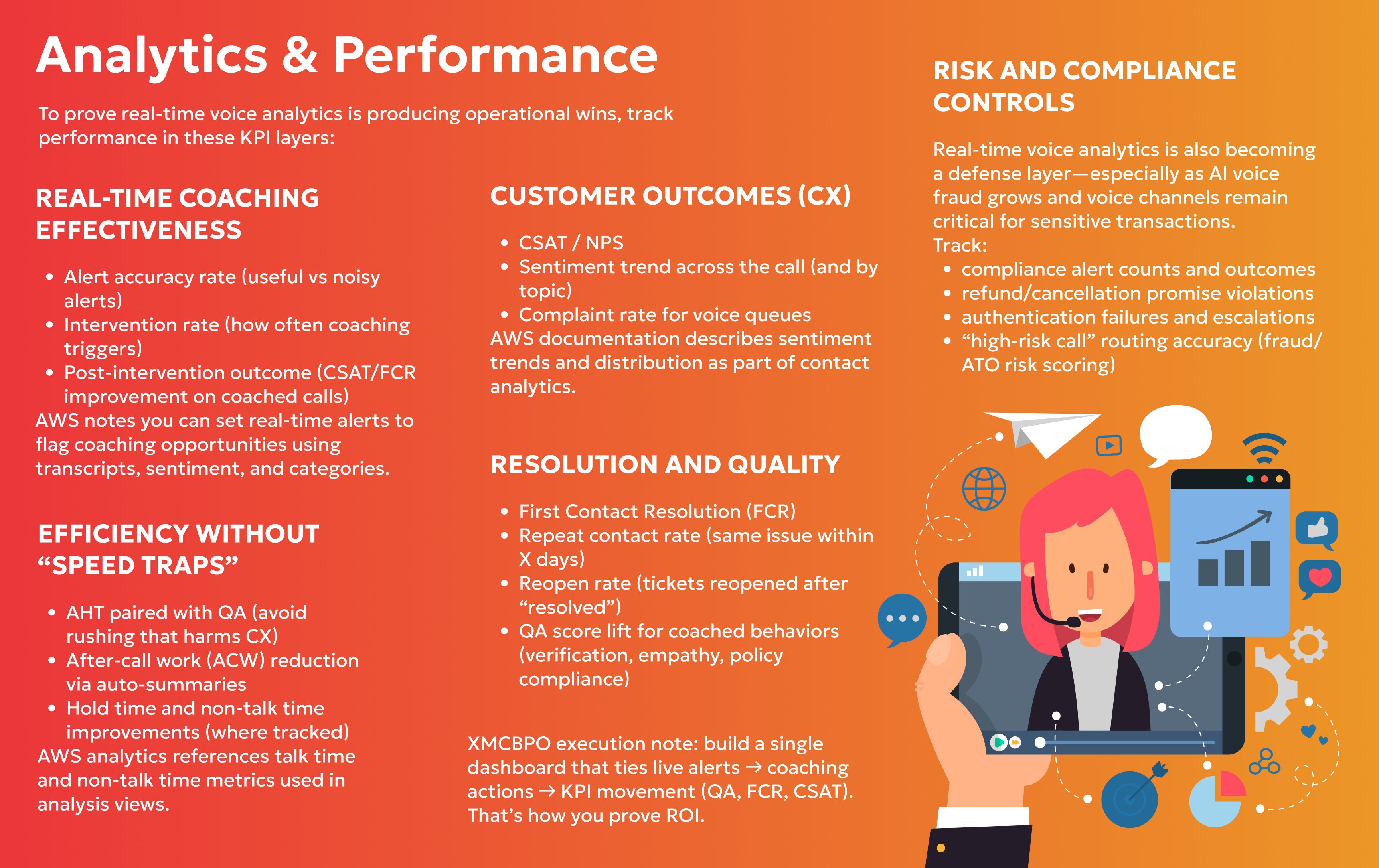
In 2026, real-time voice analytics is redefining coaching: from periodic QA feedback to instant performance support. When implemented with strong governance and measurable KPIs, it helps contact centers:
- lift QA and compliance consistency
- reduce escalations and repeat contacts
- speed up agent ramp and stabilize performance
- protect CX during emotionally charged calls
For XMCBPO, this is a powerful way to deliver “premium voice support” at scale—where every call becomes both a customer moment and a coaching opportunity.
References
- AWS. AI-Powered Conversational Analytics with Amazon Connect Customer
- AWS. Analyze conversations using conversational analytics in Amazon Connect Contact Lens
- Google Cloud. Agent Assist
- Google Cloud CCaaS. Agent Assist
- Genesys. Using speech analytics for real-time customer insights
- TechRadar. AI voice fraud is exploiting contact centers


